
 Facebook
 Google
 GitHub
 Linkedin
Industry White Paper
The Brains Behind Advanced Robots: Accelerating the Future of Robotics with Powerful, Consolidated Computing
Learn how compact, unified computing platforms help support AI, sensing, and control in mobile robots built for real-world operation.
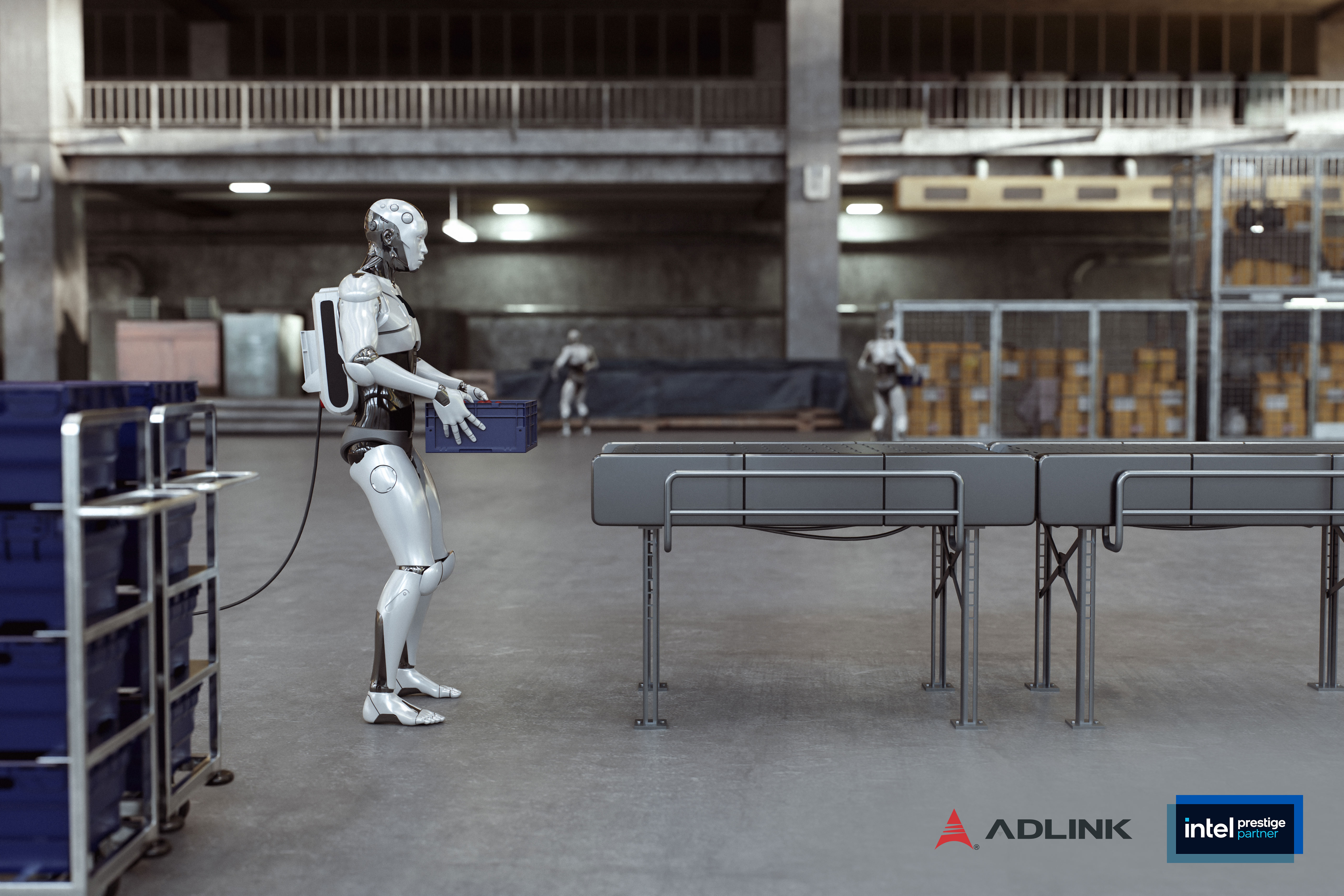
White Paper Overview
Modern bipedal and quadruped robots are moving into real-world environments across industrial, commercial, and public applications. As these systems take on more complex tasks, developers must support AI, perception, motion control, and sensor processing within platforms constrained by size, power, and operating conditions.
This paper looks at the computing requirements behind those systems, including the need to run workloads such as SLAM, vision inference, and real-time control concurrently. It focuses on the value of consolidated architectures based on Intel® Core™ Ultra Series 3 processors, which combine processing capabilities in a compact footprint while helping reduce integration complexity and support predictable performance.
It also highlights Intel® AI Edge Systems as pre-validated, interoperable architectures that integrate graphics and neural processing capabilities. This approach helps reduce system complexity, improve manageability, and ensure more predictable, long-term access to optimized hardware, supporting stable robotics deployments.
Download the white paper to explore key design considerations for robotics platforms, including thermal constraints, I/O flexibility, modularity, and long-term scalability. It also includes examples from humanoid and quadruped systems to show how these approaches can support deployment in demanding real-world environments.

